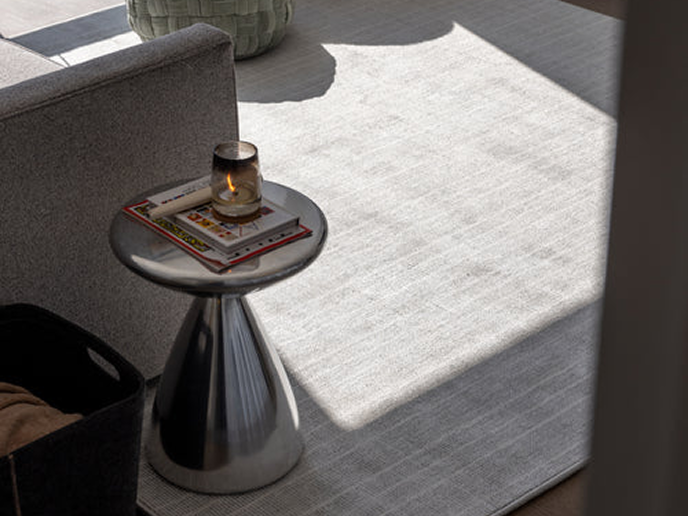
With proper care, a handmade rug will last for generations. First and foremost, you should always use anti-slip padding. It will protect the floor, minimize wear of the rug, make it softer to walk on, and keep the rug from slipping. In addition, you should use protectors on the feet of any tables or chairs that will be resting on top of the rug. This will prevent indentations and wear.
VACUUMING
Vacuuming area rugs will go a long way towards prolonging the appearance and life of your rug or carpet and is the best way to remove everyday dirt and dust. We recommend vacuuming once a week, or twice a week if the carpet is in a high-traffic area.
Use only a suction vacuum on your rug, and not a vacuum with a beater bar brush. Vacuum across in both directions of the traffic pattern to prevent matting. Be sure to check and empty your vacuum bag regularly, as vacuums become less efficient as the debris bag becomes full.
When your rug or carpet is first installed, you may notice an accumulation of fuzziness on the surface from vacuuming. This is perfectly normal and will not shorten the life of your rug. It is merely the result of loose fibers created during the weaving process.
STAIN REMOVAL
If an area rug becomes spotted or stained, work quickly. When possible, scoop up solids and blot liquids immediately after a spill occurs. Absorb as much liquid as possible with a clean white cloth or paper towel without scrubbing the area to prevent matting or fuzzing. Contact a handmade rug cleaning professional immediately.
SPOT CLEANING
Spot clean by hand with a clean cloth towel and mild wool-only detergent (pH range of 5-9), which won't leave a residue. Add only minimal moisture to the area. Pouring large amounts of water can spread the stain and cause a larger halo effect. Also, do not pour wine or salt water onto the stain. Salt can cause the leaching of color from a rug. When performing spot cleaning, blot the affected areas. Rubbing can cause fiber damage. Immediate attention to spills and spots will give the best results.
PROFESSIONAL CLEANING
If you have any major spills or stains, seek professional cleaners immediately. For regular maintenance, it is recommended to clean your rug every 2–5 years, depending on use. Do not steam clean. A reputable cleaner will hand-wash your rug using a pH-neutral detergent. For antique rugs, color testing should be performed so that colors do not bleed during the washing process.
MOLD AND MILDEW PREVENTION
Moisture causes potential mold and mildew issues with rugs. If spills occur, make sure that the rug dries completely. If possible, lift the affected area off of the pad to allow air to circulate. This will allow the moisture to dissipate. Plants are a major cause of this issue as well. Do not place a potted plant on the area rug directly, even if there is a saucer. The continuous moisture can cause rot to occur.
REPAIR AND RESTORATION
Part of the beauty of a handmade rug is that it can be repaired or restored. Be mindful of the edges and ends of your rugs. Due to regular use, these are often the first to show signs of wear. If the serging or fringe has worn, a tear or cut in the rug has happened, or other damage has occurred, please contact your local STARK representative for a recommendation to a local restorer. If restored well, the repair will be invisible, and good restoration does not diminish the value of your rug. If not maintained, the rug will sustain further damage with use.
ROTATING YOUR RUG
All rugs will fade somewhat over time. It is recommended that your rug be rotated annually. This will help prevent obvious wear patterns and fading.